
Short answer: most aren’t, but some are worth a lot. The long answer — which Pokémon cards have real value, how to spot them, and what to do with a stack you’ve had in a drawer for twenty years — is what this post is about.
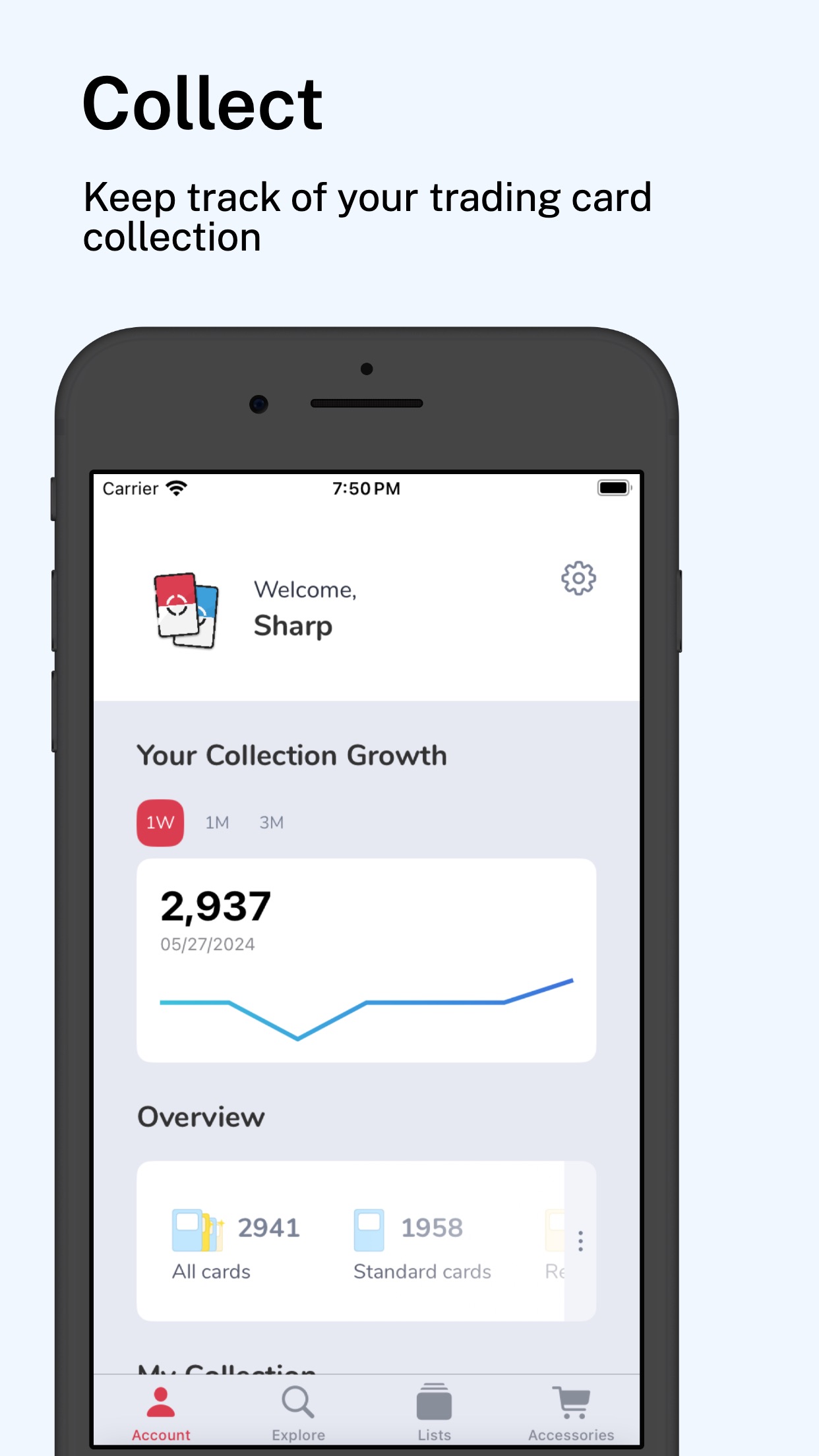
Skip the reading? Scan any card with TCG Companion and the app tells you the current market value in under a second — raw plus every tracked graded tier.
The honest baseline
Pokémon cards have been printed by the hundreds of millions since 1996. If you walk into almost any hobby shop you can buy a booster pack of common cards for around the cost of a coffee. That supply floor is why the realistic answer to “is my Pokémon card worth anything?” is usually “it’s worth between 5 cents and a dollar.”
But every set has a handful of cards that break away from that baseline, and the premium versions of those can reach four, five, even six figures. The split looks roughly like this:
- ~85% of Pokémon cards are commons, uncommons and basic holo rares — bulk value, 5c–$1 each.
- ~10% are rare holo, ultra rare, full art, or reverse holo chase cards from popular sets — usually $2–$30 each depending on set and Pokémon.
- ~4% are secret rares, illustration rares, alt arts and hyped chase cards — $30–$500.
- ~1% are vintage chase cards, first editions, error cards, and genuine grails — four, five or six figures, sometimes more.
So the useful question isn’t “is my Pokémon card worth anything?” — it’s “which of those four buckets is my card in?”
The details that move value
Five details account for almost all of the variation in Pokémon card prices:
1. Rarity symbol
Every English Pokémon card since 1999 has a small symbol in the bottom-right of the card art:
- Circle = common
- Diamond = uncommon
- Star = rare
- Star-H / double rare / illustration rare / special illustration rare = chase rarities (modern sets)
Anything past “star” is where price starts to matter. Cards with coloured foil patterns, full-art treatments or secret rares (card numbers higher than the advertised set total, e.g. 182/165) are typically the expensive ones in any set.
2. Set and year
Older isn’t always better, but the first few years of Pokémon TCG (1999–2002, English Base Set through E-Card series) have the smallest surviving populations and the biggest premiums. Modern sets with short print runs or special themes (Evolutions, Hidden Fates, Shining Fates, Celebrations, Prismatic Evolutions) also carry premiums.
Browse full card lists for every Pokémon set →
3. First edition, shadowless, and errors
On vintage cards (Base Set through Neo series), three markings move value dramatically:
- First edition stamp — small circled “1” to the left of the art. Often 3–5× the unlimited print.
- Shadowless — earliest Base Set print without the drop shadow behind the art. Premium over unlimited even without the 1st edition stamp.
- Error cards — miscut, missing holo, misprinted text. Small ones add a little, famous errors (the Ancient Mew error, the “no stage” cards) add a lot.
4. Pokémon popularity
It’s not uniform across Pokémon. A Charizard, Pikachu, Mewtwo, Eevee or Lugia pulls a premium that a Vullaby or Beartic from the same set will not. This is purely market demand, and it holds across both vintage and modern.
5. Condition
Two copies of the same card in different conditions can be priced 10× apart. Quoted market prices almost always assume near-mint — no visible whitening on corners, no scratches on the surface, no creasing, clean centering. Play-conditioned copies typically sell for 30–70% less than the quoted number.
If you’re looking at a card with real potential, the next question becomes: is it worth getting graded? That’s a longer topic — see our graded Pokémon cards guide for PSA / BGS / CGC breakdown, the four C’s of grading, and when grading makes financial sense.
Cards that are almost certainly worth checking
If you have any of these in a binder, don’t bulk-sell them without checking the number:
- 1999 Base Set holos — Charizard, Blastoise, Venusaur, Alakazam, Mewtwo especially. First edition / shadowless variants are the grail.
- First edition Neo Genesis / Neo Discovery / Neo Destiny holos — the “Lugia, Suicune, Celebi” era prints are quietly expensive.
- Promo cards with small print runs — Ancient Mew, Tropical Mega Battle, POP series promos, Japanese movie promos.
- Modern illustration rares and special illustration rares from Scarlet & Violet era — 151, Paldean Fates, Prismatic Evolutions, Destined Rivals.
- Hidden Fates and Shining Fates shiny vault (SV) cards.
- Celebrations Classic Collection reprints — the reprints themselves carry a premium.
- Pikachu VMAX “Fat Chu” from Vivid Voltage and rainbow Charizard VMAX prints.
You can find curated lists for the Pokémon collectors search for most — for instance, the rare Pikachu cards guide walks through the standouts set by set.
Cards that are probably not worth much
Be realistic about these:
- Any non-holo common or uncommon from a set newer than 2015, unless it’s a specific hyped Pokémon. Bulk value is roughly 2–10 cents per card.
- Reverse holo commons and uncommons — a small premium over the non-holo, but usually still $0.50–$2 unless it’s a chase Pokémon.
- Damaged vintage — a 1999 Charizard with creases and edge whitening is still a fun card, but the four-figure prices quoted online assume PSA 9+ condition, not played.
- Uncut sheets, proxies, and oversized jumbo cards — novelty items without a real tournament-legal or collector market.
How to figure out what you actually have
The cheapest approach is manual:
- Note the set (Symbol in bottom-right corner) and the number (e.g.
4/102). - Look up the card’s price on PriceCharting, TCGPlayer, or eBay sold listings.
- Compare your condition to the listings.
The faster approach is to scan the card with TCG Companion. The app identifies the exact card, set, number and variant in roughly a second, then shows the current ungraded market value alongside every major graded tier (PSA 10, 9.5, 9, 8, 7; BGS 10; CGC 10; SGC 10). Every result links straight to live eBay listings so you can verify with real, current asks.
Doing a whole binder by hand is a full afternoon. Doing it with a scanner is 20 minutes.
So — what are your cards worth?
If your binder is mostly post-2015 booster pulls, you’re looking at maybe $15–$40 for the whole stack unless you got lucky with a few specific hits. If it’s full of 1999–2002 holos in good condition, the answer changes dramatically — individual cards can cover the value of the rest of the binder combined.
The only real way to know is to go card by card. The scanner makes that less painful, but either way, don’t bulk-sell a vintage lot without checking the big names.
Related reading
- Pokémon Card Value Checker — the fastest way to check
- Graded Pokémon cards explained — PSA vs BGS vs CGC
- Rare Pikachu cards worth looking for
- How much is my Pokémon card worth? — the pre-pricing checklist
- Browse all 178 Pokémon TCG sets