
Pikachu has been printed on hundreds of Pokémon cards since the Base Set released in 1999. Most are commons worth pocket change. A handful, though, have aged into serious collector cards — either because they were short-printed, came from a beloved set, or feature art that just won’t die.
Here are the rare Pikachu cards worth knowing about if you’re building a collection, chasing pulls, or trying to work out what that Pikachu you found in a binder is actually worth.
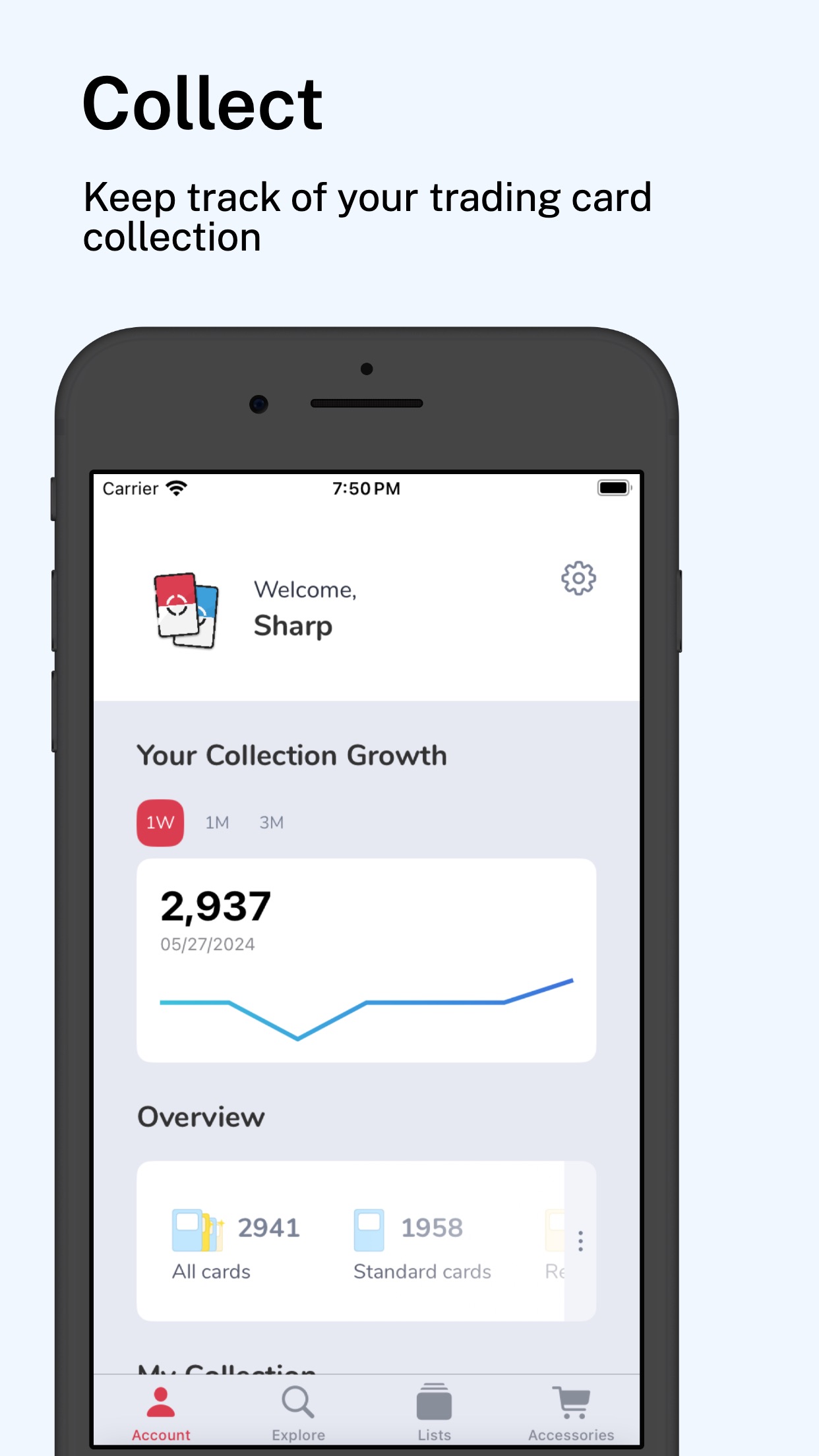
Tip: got a Pikachu card already? Scan it with TCG Companion and see the current market price (raw + every tracked graded tier) in under a second.
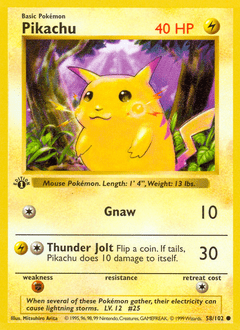
Pikachu — Base
#58 · Common (1999)
The original 1999 Base Set Pikachu. Not rare on paper, but first-edition and shadowless copies in high grades are a foundational collector grail.
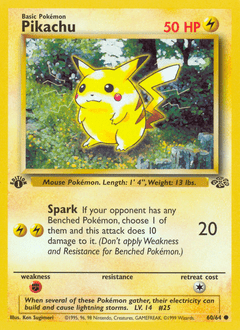
Pikachu — Jungle
#60 · Common (1999)
Jungle's Pikachu. First-edition copies carry a premium, and PSA 10s from the 1999 English run are increasingly hard to find.
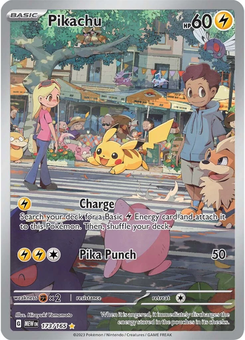
Pikachu — Scarlet & Violet 151
#173 · Special Illustration Rare
The 151 set's big Pikachu chase — a full special illustration rare print with a classic Kanto scene that pulls a premium on release hype.
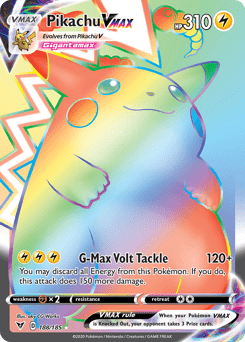
Pikachu VMAX — Vivid Voltage
#188 · Secret Rare
The famous 'Fat Chu' Pikachu VMAX — one of the most recognisable Pokémon cards from the Sword & Shield era. Consistently one of the chase cards of its set.
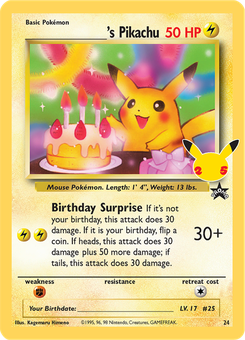
Birthday Pikachu — Celebrations
#33 · Classic Collection
Classic Collection reprint of the fan-favourite Birthday Pikachu with the iconic cake illustration. A nostalgia-driven pull from the 25th-anniversary set.
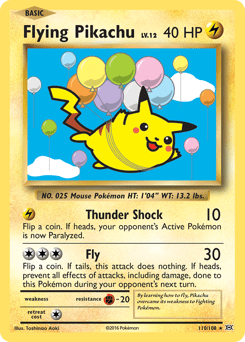
Flying Pikachu — Evolutions
#110 · Secret Rare
Evolutions' Flying Pikachu — a nod to the 1999 Ivy Limited promo, reprinted as a secret rare with better availability.
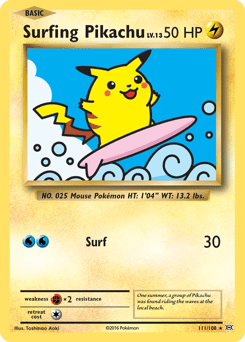
Surfing Pikachu — Evolutions
#111 · Secret Rare
Evolutions' Surfing Pikachu. Pairs with the Flying Pikachu as one half of the most-collected Pikachu duo in modern sets.
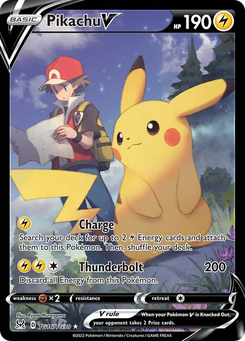
Pikachu V — Lost Origin
#TG16 · Trainer Gallery Ultra Rare
A clean, modern Pikachu V from the Lost Origin Trainer Gallery. Popular in slab collections thanks to its crisp art.
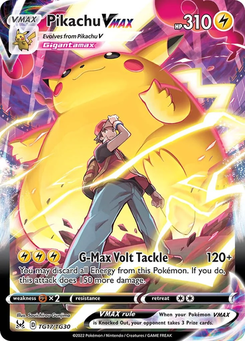
Pikachu VMAX — Lost Origin
#TG17 · Trainer Gallery Ultra Rare
The Lost Origin Pikachu VMAX trainer-gallery print — a standout alt-art that collectors chase in PSA 10.
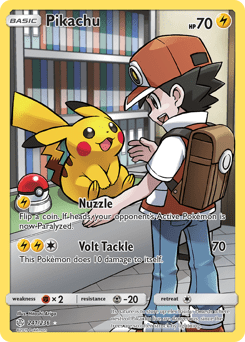
Pikachu — Cosmic Eclipse
#241 · Rare Secret
Cosmic Eclipse's secret rare Pikachu — a 'tag team' era chase that's aged into a quiet collector favourite.
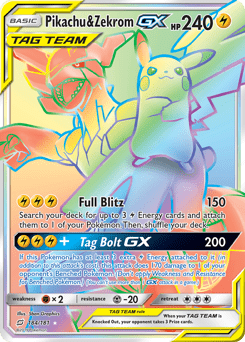
Pikachu & Zekrom-GX — Team Up
#184 · Rare Secret
The Pikachu & Zekrom-GX rainbow rare from Team Up — one of the hyped pulls of the Sun & Moon era and still strong in graded slabs.
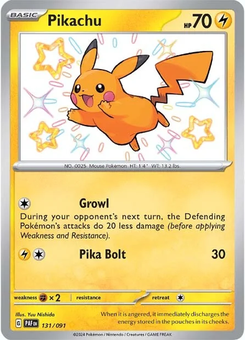
Pikachu — Paldean Fates
#131 · Shiny Rare
A shiny Pikachu from Paldean Fates — a set built almost entirely around shiny variants, which made every Pikachu slot a hot pull.
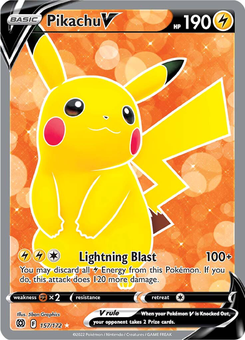
Pikachu V — Brilliant Stars
#157 · Rare Ultra
Brilliant Stars' alt-art Pikachu V — consistently one of the chase prices of the Sword & Shield era and still climbing in PSA 10.
So what’s actually driving Pikachu prices?
Three things move Pikachu cards more than anything else:
- Nostalgia peaks. Older Pikachus (Base, Jungle, first promos) ride long-term waves as collectors return to the hobby. They dip, they rip, but the long curve is up.
- Set hype cycles. Modern Pikachus spike hard on set release (151, Paldean Fates, Vivid Voltage all did this) and settle over 6–12 months. If you opened on release, selling into the spike beats waiting.
- Graded premiums. Pikachu is one of the most-graded Pokémon in the hobby, so PSA 10 populations are high and gem premiums are tighter than on niche Pokémon. Condition matters, but the PSA 10 delta is smaller than you’d expect.
How to value the Pikachu in your binder
The card number at the bottom (e.g. 58/102 for Base Set, 173/165 for 151) tells you which print it is. From there:
- Check the rarity symbol — circle = common, diamond = uncommon, star = rare, and anything with extra holo / alt-art treatment is where the money is.
- Look for first-edition markings on older sets (Base through Neo). First editions are often 3–5× the unlimited print in comparable condition.
- Check the back — Japanese, European and promo variants sit at different price tiers than the English standard print.
- Grade matters, but don’t over-invest. Sending a raw near-mint Pikachu to PSA only makes sense when the PSA 10 price clearly clears grading + shipping + risk.
The fastest way to check all of this is to scan the card with TCG Companion and let the app tell you the exact print, variant and current market value.
Related sets worth browsing
- Base Set (1999) — the original Pikachu
- Jungle (1999) — the second classic Pikachu
- Evolutions — modern reprints of iconic Pikachus
- Vivid Voltage — home of Pikachu VMAX “Fat Chu”
- Scarlet & Violet 151 — the Pikachu illustration rare
- Celebrations — Birthday Pikachu reprint
- Paldean Fates — shiny Pikachu
- All Pokémon TCG sets