
If you’ve bought or sold a Pokémon card in the last few years, you’ve seen them: cards sealed in hard plastic cases with a printed label and a number like “PSA 10” or “BGS 9.5” across the top. Those are graded cards, and the number is doing a lot of work — it decides the price, the confidence buyers have in the card, and sometimes whether the sale happens at all.
This post walks through what grading actually is, the companies that do it, how the grades are decided, and the honest answer to “should I grade this card?”
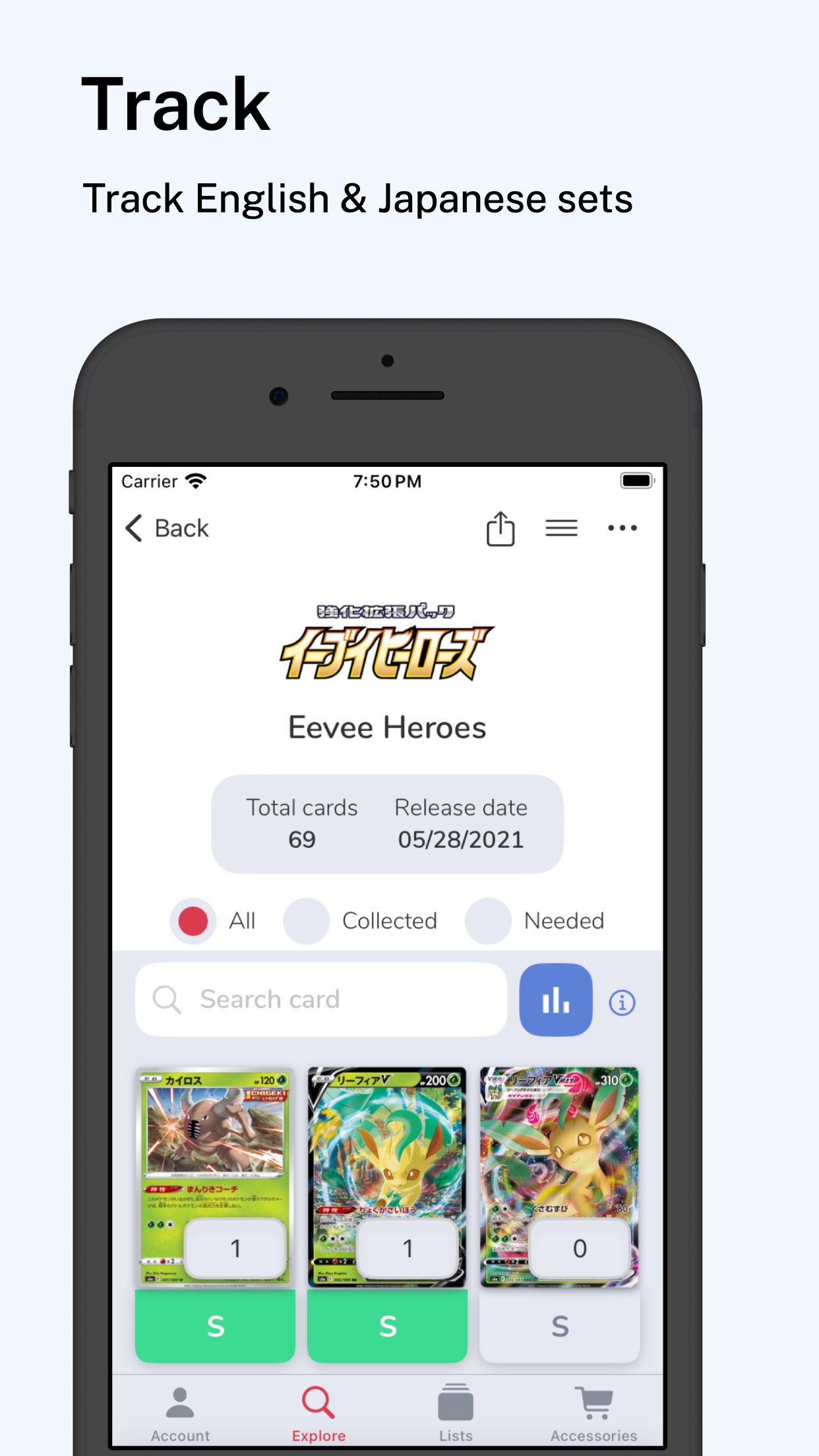
Tip: already sitting on a stack of cards you’re thinking about grading? Scan them with TCG Companion first and the app will show you the raw market price alongside every major graded tier, so you can do the maths before you submit.
What does “grading” actually do?
A grading company does three things:
- Authenticates the card. They confirm it’s a real print from a real set, not a proxy, reprint or fake. For modern Pokémon this is almost always fine; for 1999 Base Set first editions this is a huge deal.
- Assesses the condition using a standardised 1–10 scale. Several humans (and, increasingly, machines) look at centering, corners, edges and surface and assign a number.
- Encapsulates the card in a tamper-evident plastic slab with a label showing the grade, set, card name and a unique serial number.
That slab then becomes the tradable unit. “A PSA 10 Charizard” is a different market from “a raw Charizard” — they’re priced separately, tracked separately, and trusted differently.
The four things graders look at
Every major grading company uses some version of the same four criteria, sometimes called “the four C’s”:
- Centering — how evenly the art is framed by the border. Most grading scales want the card within a 55/45 or 60/40 split left-to-right and top-to-bottom. Off-centre cards rarely pull a 10.
- Corners — sharpness and whiteness. Rounded, fuzzed or whitened corners are the fastest way to lose a full grade point on modern cards.
- Edges — any chipping, fraying or colour loss along the edge. Look at a black-bordered card at a sharp angle and the flaws jump out.
- Surface — print lines, scratches, indentations, holo scratches (brutal on Base Set Charizards), and any dirt or residue.
Each company weights these slightly differently, and that’s where the discussion gets interesting.
The major grading companies
PSA (Professional Sports Authenticator)
PSA is the largest and best-known grading company in trading cards. For Pokémon in particular, a PSA slab is still the market default — PSA 10 prices are typically the highest of any grade and the population reports are the most widely quoted.
- Scale: 1 to 10, with 10 being “Gem Mint.”
- Half-grades: only at PSA 9.5 (no PSA 8.5 etc.).
- Label style: red label for standard, gold for “Authentic” and special tiers.
- Turnaround: ranges from roughly 10 business days for express tiers up to several months for bulk economy tiers, depending on submission type.
- Cost: varies by declared value and service level — the cheapest bulk tiers land around $15 per card, premium express tiers run into the hundreds.
- Reputation: the “default” Pokémon grading company. Resale premium over other graders is real and consistent, especially for vintage.
BGS (Beckett Grading Services)
BGS has historically been the #2 name in TCG grading, and they have the most detailed report: every card gets a composite grade plus four sub-grades for centering, corners, edges and surface printed on the label.
- Scale: 1 to 10, with a 10 being “Pristine” and a 9.5 being “Gem Mint.” Black Label Pristine 10 (four 10 sub-grades) is the rarest and most expensive outcome.
- Sub-grades: the distinguishing feature. You see exactly where a 9.5 lost the half-point.
- Label style: silver (standard), gold (9.5+), black (Black Label Pristine 10).
- Notable nuance: because of the sub-grade system, BGS 9.5 is often harder to hit than PSA 10, but PSA 10s typically sell for more in Pokémon specifically.
CGC (Certified Guaranty Company)
CGC came into TCG grading from comics and has grown fast in the Pokémon market. They’re known for strict standards, clear labels and — crucially — faster and often cheaper turnaround than PSA.
- Scale: 1 to 10, half-point grades supported (9.5 is “Mint+”, 10 is “Pristine” with “Perfect 10” as the top tier).
- Label style: clean white label with a holographic strip; the label shows centering notes.
- Pros: well-respected, transparent criteria, quicker turnaround than PSA in most windows.
- Cons: resale premium is still typically below PSA 10 for the same card in the same condition, though the gap has been closing.
SGC (Sportscard Guaranty Corporation)
SGC is older than it looks — they’ve been grading sports cards since the late ’90s — and they’re known for the distinctive black “tuxedo” slab. They grade Pokémon too, though at lower volume than the big three.
- Scale: 1 to 10, “Pristine 10” and “Gold Label” for Pristine+.
- Strengths: consistent strictness, gorgeous slabs, strong reputation for vintage.
- Tradeoff: smaller Pokémon resale market than PSA or BGS.
The newer entrants
- ACE Grading (UK-based): a newer grader with a strong UK/EU following. Faster turnaround and more affordable than shipping to PSA from Europe.
- GetGraded (UK-based): another UK option growing with the European market.
- TAG Grading: uses automated computer vision to grade on a 1–1000 scale (mapped back to a 1–10), aiming to remove grader-to-grader variance.
The newer entrants have their place — especially for collectors who want slabs for display rather than maximum resale — but for resale value, PSA is still the most liquid slab on the Pokémon market.
Cross-checking a grade before you submit
The single most useful thing you can do before sending a card to grading is be honest about the flaws you already see. Grading companies will find them. The cheap submission tiers are cheap for a reason — if the raw card won’t hit the grade you need to justify the fee, you’re just paying $15–$25 to encase a card in plastic.
A quick pre-grading checklist:
- Look at the card under a desk lamp, front and back, at an angle. Rotate it slowly — surface scratches and print lines show up only at certain angles.
- Check centering with a ruler or a centering tool app. Under a 60/40 split on any axis is rough for a Gem Mint.
- Look at all four corners under magnification (your phone camera’s zoom is enough). Any whitening is a grade-killer.
- Check the back for scratches, edge wear and centering — BGS especially scores the back.
- Compare to recent PSA 10 and PSA 9 sold listings in TCG Companion’s price lookup to see what the grade gap is actually worth on this specific card.
When grading is (and isn’t) worth it
Grading makes financial sense when three things line up:
- The card is near-mint or better. Sending play-conditioned cards to grading mostly produces PSA 7s, which for most modern Pokémon don’t clear the cost of grading.
- The graded premium is real. For a common from a 2023 set, the difference between a raw near-mint and a PSA 10 might be $8. Grading fees alone won’t work out.
- You can wait. Turnaround is months for the cheap tiers. Market movements during that wait can make or break the math.
It’s not worth grading:
- Commons and uncommons in modern sets unless they have some secondary demand reason (shiny, alt art, first editions of special promos).
- Play-conditioned vintage cards where the grade ceiling is 6–7.
- Cards whose raw price already clears the price of a mid-tier graded version in the same grade range you expect.
It is worth grading:
- Vintage Pokémon in clearly strong condition — Base Set, Jungle, Fossil holos, 1999 first editions.
- Modern chase cards (illustration rares, secret rares, alt arts) where PSA 10 premiums are significant.
- Sentimental cards you want to protect regardless of resale.
How TCG Companion shows graded prices
Every card scan inside TCG Companion includes the ungraded market price alongside eight graded tiers sourced from PriceCharting:
- PSA 10, 9.5, 9, 8, 7
- BGS 10
- CGC 10
- SGC 10
So before you decide whether to submit a card, you can see — on the same screen — what each tier is actually worth right now, across all four major graders. If the PSA 10 is $120 and the raw near-mint is $95, the math on grading is very different than if the PSA 10 is $500.
Scan a card and see its graded prices →
Related reading
- How much is my Pokémon card worth? — the quick-value checklist
- Pokémon Card Value Checker — the app feature that surfaces graded prices
- Rare Pikachu cards worth looking for — a curated list of graded-market favourites
- Browse all 178 Pokémon TCG sets